
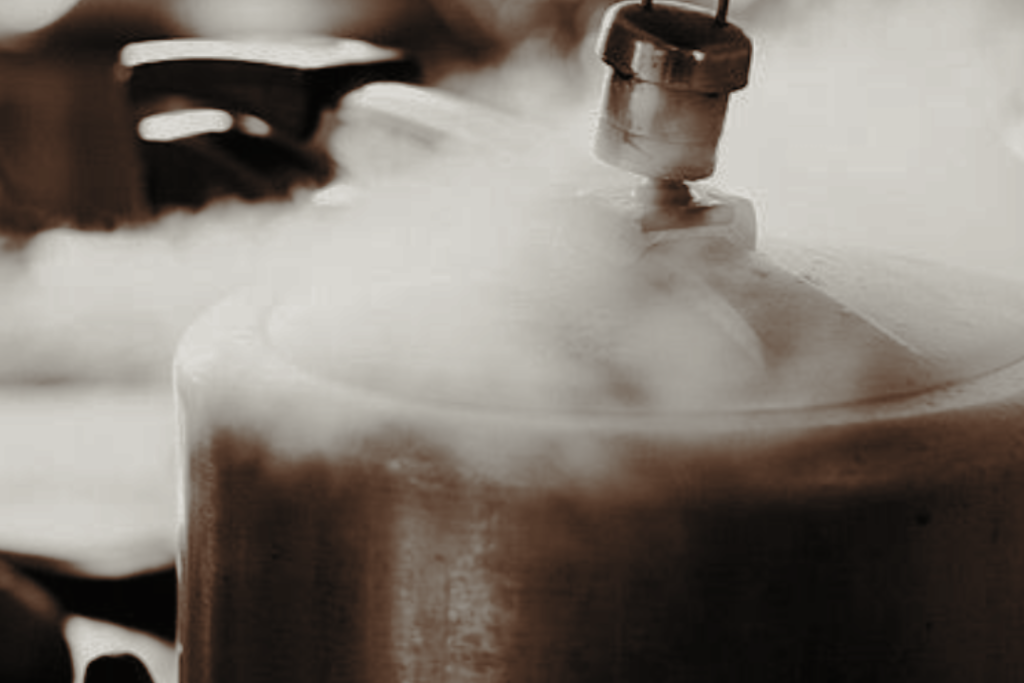
My mother never yells.
She doesn’t throw things, slam doors, or deliver speeches about hurt. Her rage, when it comes, arrives as something else: measured silences, withdrawn affection, hands folding clothes faster than usual. It is not dramatic. It is not even declared. But it is unmistakable.
There is a grammar to it. A pause that lingers too long in the air. A metal plate clangs just slightly harder than usual. Curtains are drawn in the middle of a bright day. I registered the change before I could name it. I was still learning vocabulary. But I knew the language. I grew up watching it move under her skin, like something she was determined to keep folded inside her sari pleats. When something upset her, such as when my father dismissed her suggestion, when a family member said something cruel, or when she was exhausted tending to us, she didn’t name it. She would sigh, set the pressure cooker down with a decisive clang, and say nothing.
My first encounter with translation involved interpreting gestures and emotions. I was raised bilingual in Hindi and English, but fluent in something far more complex: the lexicon of my mother’s silence. A lexicon passed down through generations of women who were taught, early, that their feelings needed to be managed, hidden, or, when necessary, transformed into something useful. Something easier to live with. Rage was not part of that curriculum. At least, not openly. And yet, it lived on. Not as words, but as residue.
If the body is an archive, then women’s anger is its most carefully preserved document. In our family, it is not stored in voice. It is stored in hands that clean obsessively. In backs that turn mid-sentence. In throats that clear but never speak. I learned to read my mother’s emotions through her movements. How she arranged the kitchen shelves when irritated, or the careful smile when she felt ignored.
These were not accidents. They were strategies.
I do not believe she is unaware of what she is doing. She simply operates in a language more attuned to survival than expression. There are consequences to being the loud woman, the angry daughter, the difficult daughter-in-law. So, over time, women like her refined their rage into something less visible but no less potent.
The irony is this: silence, when practiced long enough, becomes eloquent.
Whenever my mother is angry, she picks up more tasks around the house. An extra batch of laundry is added to the list. The kitchen’s top cabinets, unopened for months, would be scrubbed down as if the grease itself had wronged her. As a child, I never understood it. If you’re angry, why would you salt the wound by exerting yourself more? I never asked what had upset her;the answer, undoubtedly, would have been “nothing.” Eventually, I began to understand: her discontent did not arrive in confrontation. It arrived in motion. In relentless tidying.
I absorbed it, not as trauma, but as instruction. I saw an emotional code refined over generations, where fury was cleverly disguised as order. I thought rage was meant to shatter calm, to rupture stillness. And this always left me conflicted: how could something so contained still be called rage? Yet, there it was, reconfigured as discipline, performed through chore. And in its endurance, it taught me to reconsider the very grammar of anger.
In many ways, I am the first woman in my lineage to speak freely about her anger. To name it, dissect it in therapy rooms, even aestheticize it here. My mother taught me to speak with a restraint that she had perfected over years. To balance my emotions with grace. But I write to undo that hush: about her, about myself, about the spaces between what we felt and what decorum allowed us to show.
This naming is a form of translation.
It’s not a perfect one. Every time I write about my mother’s silence, I worry that I am mistranslating her intention. That I am turning something private and powerful into performance. That I am converting survival tactics into narrative devices. Translation is, after all, an act of power. It decides what is worth carrying across. And what gets to be left behind.
I wonder if my mother would recognize herself in my words. Or if my English betrays the cadences of her acts. If, in the act of turning her anger into text, I’ve made it too clean, too unidimensional. Does that mean I’ve understood her? Or rewritten her?
Yet, translating would allow the silence to become clear.
What makes this translation feminist, I believe, is this: a refusal to soften what was sharp. A refusal to explain away what was deliberate. My mother’s rage is not a failure of communication. It was an act of control in a world where women had so little of it. To not speak was her way of not giving away what power she had.
When I write about her, I try to preserve the shape of that silence.
My grandmother never openly says she is upset. She refuses to eat. The entire household is thrown into a panic. No one says the word “angry,” but we know. She is enacting dissent in the only language she knows well. My mother never copied that tactic exactly. Instead, she took longer walks. Stopped answering questions. Developed a stoicism that resembled grace but often masked fury.
And me? I write.
I draft essays like this one and pretend I’ve evolved. That by speaking directly, I’ve broken the pattern. But when I’m angry, I tidy my room. I change my sheets and sink back into the same cratered spot on my bed. As if control over my environment might translate to control over myself.
Still, I remain unsettled. The urge to rupture doesn’t dissolve. It leaks out in slammed doors, sharp replies. Then shame follows, not because I was wrong, but because I broke the code. I wasn’t supposed to let it out like that. I was supposed to know better.
What is “better” anyway? Just another directive a good woman is meant to follow?
I wonder how my mother carries that same heat so quietly, without combustion. Having the privilege to be born into a slightly more permissive world and being slightly more fluent in feminism, I have the audacity to judge my mother for her passivity.
I still retreat into silence like my mother. I deliver refusals in the shape of changed habits: texts not replied to, phone calls cut short, doors shut. The women in my family did not pass on their anger. They passed on its architecture. I have filled it with different words, different acts, but the structure remains.
This is my lineage.
When we translate emotion across generations, something is always lost. But something else is carried. I laugh like my mother, with a sharpness I inherited from her mother. There are gestures I use unconsciously, such as folding towels a certain way, rinsing rice thrice, or a particular tilt of the head, that carry embedded emotion.
My body is an archive. A storage system for gestures, intonations, refusals. We carry our mothers’ ways of being before we even realize they’re unusual. The philosopher Walter Benjamin argued that translation is not about finding equivalence, but about finding kinship. I think about that often.
My rage is not equal to my mother’s. It is related. It asks to be interpreted.
The mechanics of this emotional translation are rarely acknowledged. We talk of generational trauma, but not much of generational vocabulary, or how women communicate across decades through coded behaviour. How a sigh in 1980 becomes a tweet in 2025.
What does it mean, then, to be the translator of a language my mother didn’t mean to teach me? What responsibilities do I carry when I interpret her silence for a public she never addressed?
To translate is also to trespass. To speak of my mother’s silences is, in some way, to claim ownership of what she kept sacred. But to remain silent in turn would be to let the pattern continue unquestioned. Perhaps that’s the hardest part: learning when to break with tradition, and when to honour it. I don’t want to shout for the sake of shouting. I want to make space for my mother’s quiet, for my own clarity, for all the ways rage moves without sound.
Anger does not need to be loud to be political. In fact, the loudest things are often easily dismissed, easily discredited, and as a result, seemingly unthreatening. But the stillness that comes with quiet can be more dangerous. More enduring.
My mother’s rage lives on in my syntax. In the words I still hesitate to use or emotions I refuse to name. It also lives in my refusal to apologise for naming it.
To write this essay is not to betray her, rather to recognise her. Not as a victim of suppression, but as a master of codes. A woman who knew the rules and found her own way to bend them. In the process, I am also making her legible to myself.
I sometimes wonder: what would it mean to develop a new lexicon for rage? One that honours silence without romanticising it? One that allows women to choose their form, not out of necessity, but out of desire?
I think it begins with translation.
We often associate feminism with articulation and by extension, naming, voicing, testifying. My mother doesn’t talk about feminism in the way I do. She doesn’t call herself angry. She does not speak the language of empowerment or healing or emotional literacy. Once, in college, I tried explaining ‘empowerment’ to her—how it’s about owning your voice, asserting your worth. She looked at me, puzzled but amused, and said, “Toh tumhe lagta hai ham kamzor hain?” So you think I am weak?
I didn’t understand then that she had been powerful in a way my vocabulary didn’t account for. Her feminism is simply expressed in a language too local to be subtitled.
Now, I am here to say: It was enough. It was fierce. It made me.