
quest (n): a jury of inquest; investigation; an act or instance of seeking; pursuit, search
(obsolete): a person or group of persons who search or make inquiry
Etymology: c. 1300, “an inquest, a judicial inquiry;” early 14c., “a search for something, the act of seeking, pursuit” (especially in reference to hounds seeking game in the hunt), from Old French queste “search, quest, chase, hunt, pursuit; inquest, inquiry” (12c., Modern French quête), properly “the act of seeking,” and directly from Medieval Latin questa “search, inquiry,” alteration of Latin quaesitus (fem. quaesita) “sought-out, select,” past participle of quaerere “seek, gain, ask”
quest (v): to search a trail
to go on a quest
To search for; to ask for
Etymology: mid-14c., questen, “to seek game, hunt” (in reference to dogs, etc.), from quest (n.) and from Old French quester “to search, hunt,” from queste (n.). Related: Quested; questing. Of persons, in the general sense of “go in search, make inquiry,” by 1620s. Of hunting dogs, “to bark, bay,” as when on the scent of game, mid-14c.
It was a dry December of 2016 – the third semester of my undergraduate study was over, and I had successfully mapped my journey from Classical Literature to American Literature. A few days after my arrival home, I was beckoned over to my grandfather’s room.
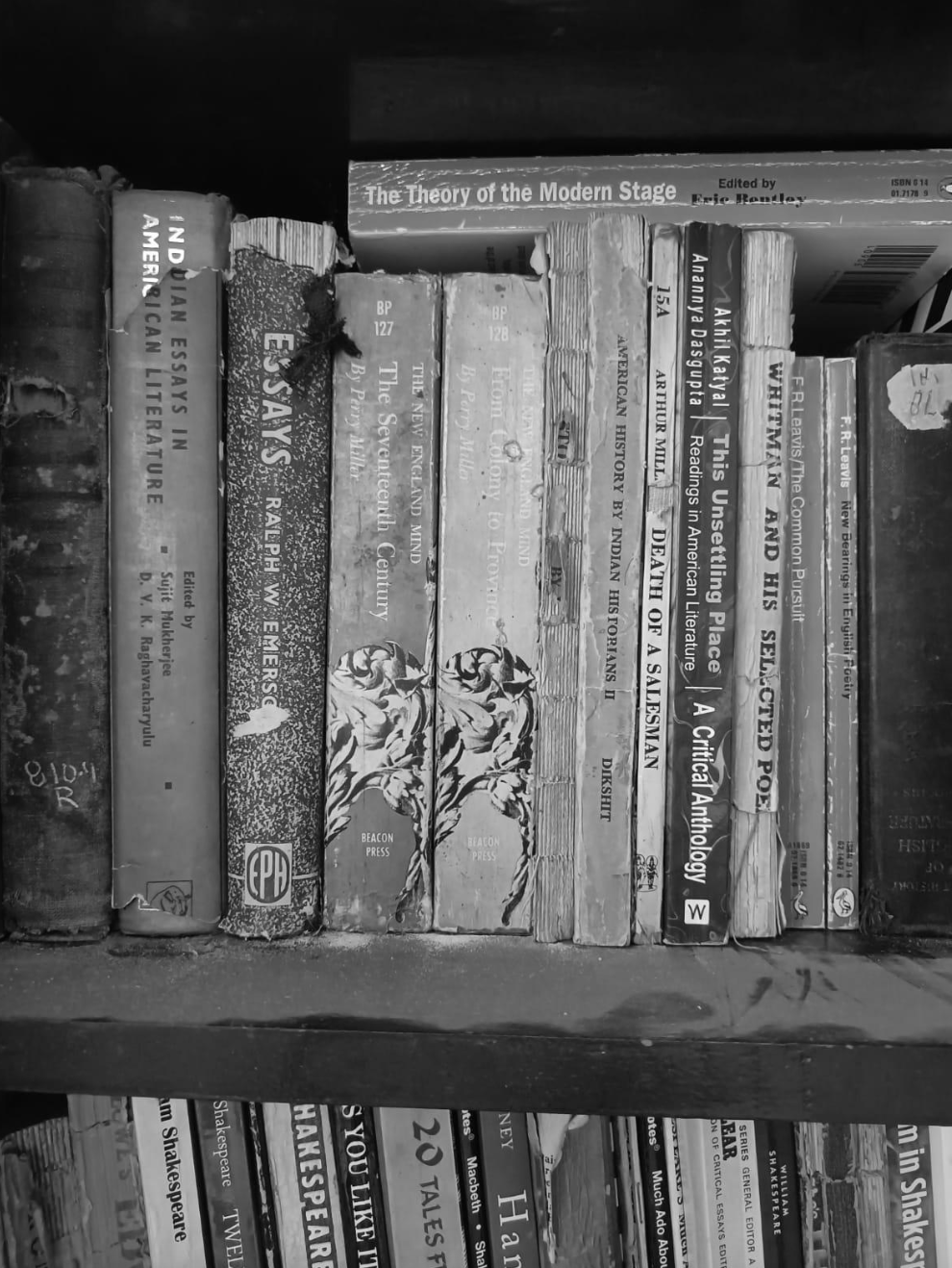
The reason for the beckoning was simple, and choral – every vacation, I help my grandfather in correcting answer scripts from a national open university. I was soon put to work – gather answers to the questions from the internet, arrange the answer scripts in a particular order etc. And the most important element of this exercise – retrieve books, relevant to the question sets, from his library.
My grandfather’s room has been my favourite. I suspect it was here that I learnt to dream my first words. It was also here that I was first read to Aesop’s Fables in Hindi. One may pin down the essence of the room in painting – fleets of books illuminated, alternatively, by sunlight and tubelight.
It was, during this biannual quest of mine, that I met K. Ayyappa Paniker meeting Walt Whitman. I was all too familiar with the latter – I had only recently examined him and his passage to India, and life seemed to have completed a sectional orbit. For someone obsessed with patterns and pinning down connections, I was naturally intrigued by this encounter. I hunted down the entire poem, googling the passage from that “reference to context” question, arriving at the entire poem, and a realisation. The poem was a postdiction. The poem was a retroactive account structured as a bracketed interview. The poem was a translation.
All translation is an act of quest.
The passage – wonder- an odyssey – the hunt- wander – a pursuit – knowing. strive
translation (n): an act, process, or instance of translating: such as
: a rendering from one language into another
also: the product of such a rendering
: a change to a different substance, form, or appearance : conversion
: a transformation of coordinates in which the new axes are parallel to the old ones
: uniform motion of a body in a straight line
: the process of forming a protein molecule at a ribosomal site of synthesis from information contained in messenger RNA
Etymology: mid-14c., translacioun, “movement from one place to another, specifically “removal of a saint’s body or relics to a new place;” also “act of rendering of a text from one language to another; a text produced by translation into another language;” from Old French translacion “translation” of text, also of the bones of a saint, etc. (12c.) or directly from Latin translationem (nominative translatio) “a carrying across, removal, transporting; transfer of meaning,” noun of action from past-participle stem of transferre “bear across, carry over; copy, translate” (see transfer (v.)). From late 14c. as “miraculous conveyance to paradise;” also used in Middle English of transplanted saplings. As adjectives, translative (16c.), translatory (18c.), translational (19c.)
process – act – form – motion- process – transplant.
All translation is an act of walking.
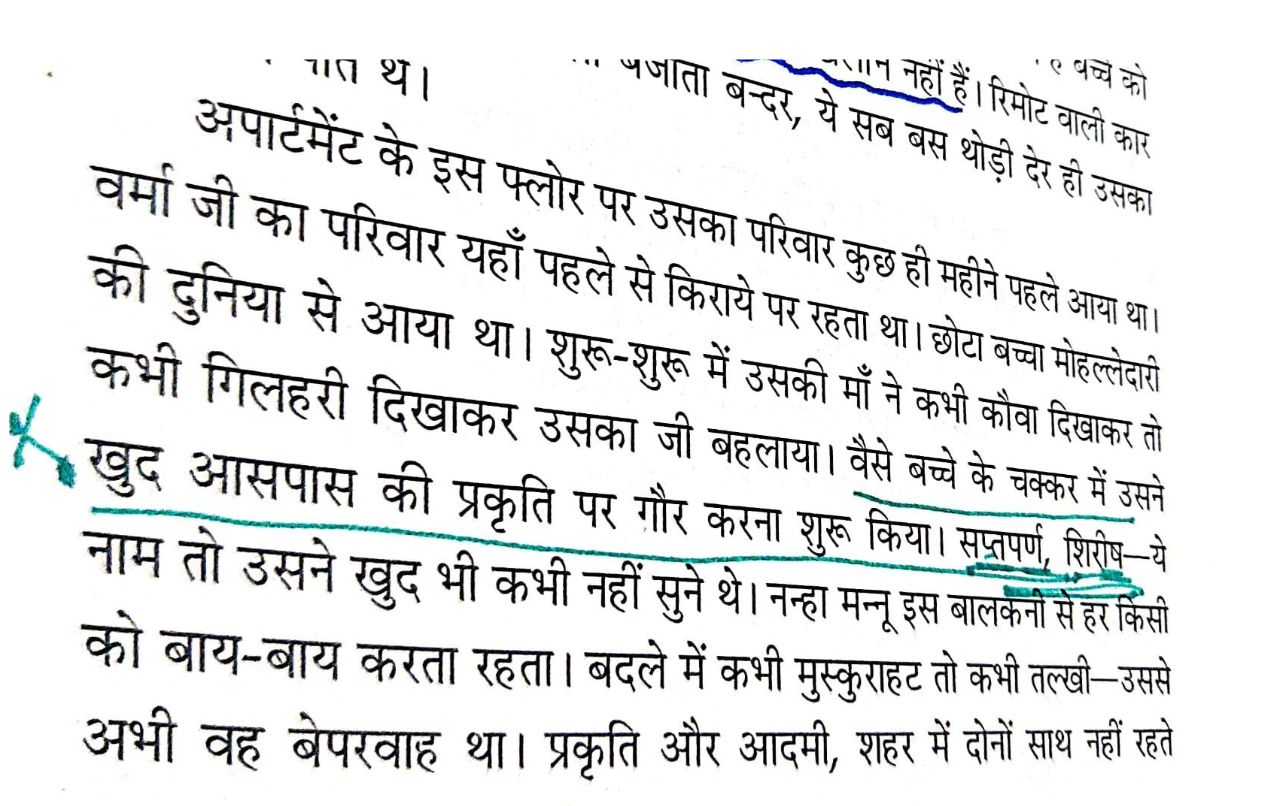
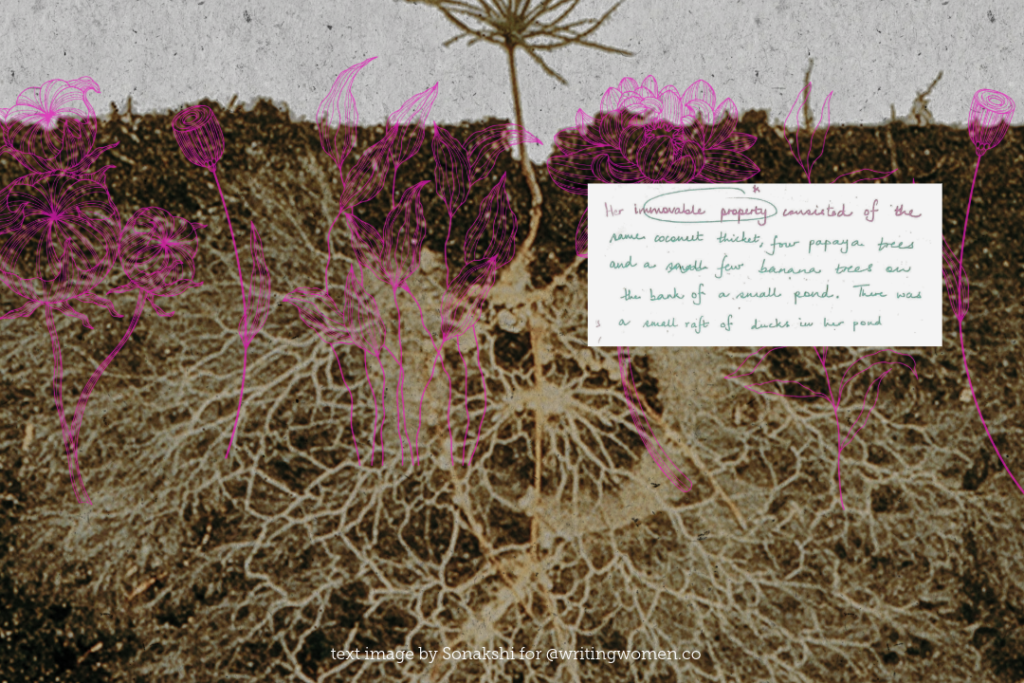
A text is a garden. To read is to stroll. Like the mother here – you learn to notice – and it is in this renewed act of noticing that you sharpen wonder. You detour – asterisking, semi-coloning, questioning – ambulating between choices.
All translation is an act of noticing.
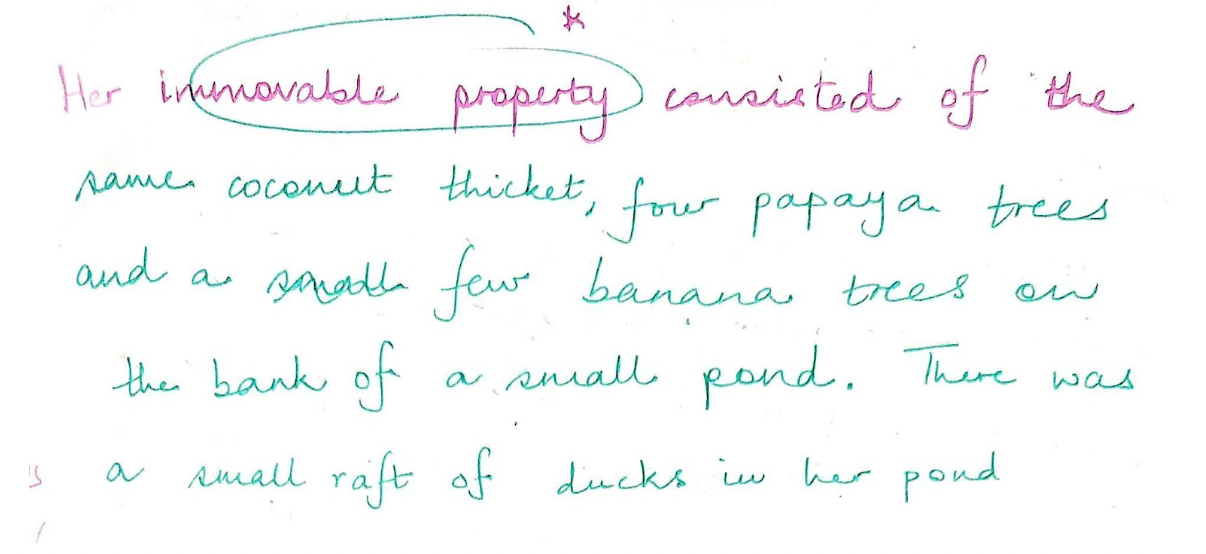
In a workshop once, I did not translate the names of the native trees. The nativity was rooted so deep that the thought of translating the names to their botanical nomenclature did not occur to me at all. It was only natural – the names, the familiarity. However, my fellow translators asked me to pause, revisit, and pay attention to this tumbling catalogue of native names.
What kind of a tree is Neem? Azadirachta indica
What kind of a plant is Madhua? Madhuca longifolia
What kind of a plant is Jamun? Syzygium cumini, Malabar plum, Java plum, black plum.
I foraged from the internet.
All translation is an act of attention – to the natural, the mundane.
It is a truth universally acknowledged that no walks are ever easy, and some walks require more attention than others.
Steps precede Walk.
You learn to let awe guide you as meanings sprout in the textual lanes.
You are an enterprising spirit.
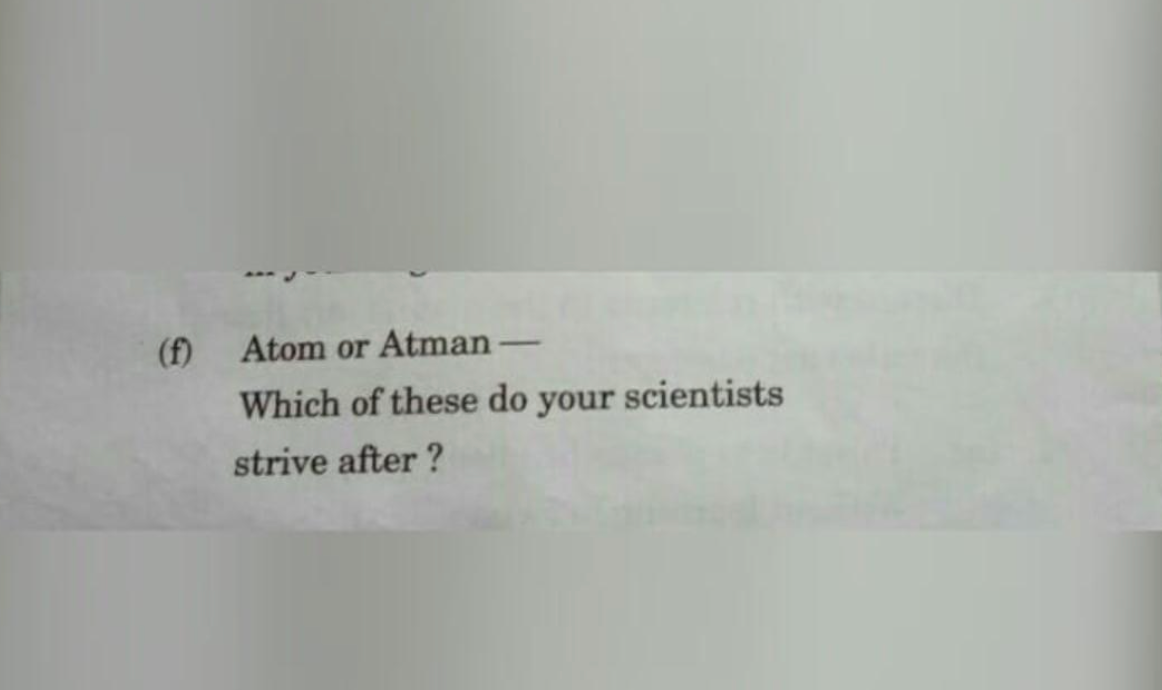
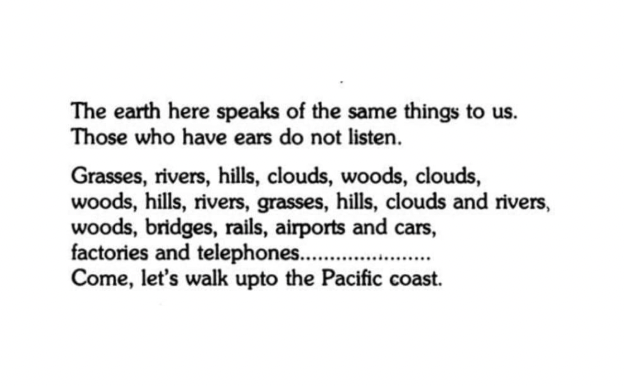
You move beyond the atom to the atman – the earth of the page here speaks of the same things to us – you learn to walk with those who have walked before – you walk for those who are yet to walk.
All translation is an act of mapping wonder.
.
.
.
.
.
Works cited:
- Harper, Douglas. “Etymology of quest.” Online Etymology Dictionary, https://www.etymonline.com/word/quest. Accessed 5 July, 2025.
- Harper, Douglas. “Etymology of translation.” Online Etymology Dictionary, https://www.etymonline.com/word/translation. Accessed 11 July, 2025.
- Paniker, K. Ayyappa, et al. “I Met Walt Whitman Yesterday: (An Interview)”, translated by A.J. Thomas, Indian Literature, vol. 37, no. 5 (163), 1994, pp. 18–20. JSTOR, http://www.jstor.org/stable/44295545. Accessed 5 July 2025.
- “Quest.” Merriam-Webster.com Dictionary, Merriam-Webster, https://www.merriam-webster.com/dictionary/entry. Accessed 5 Jul. 2025.
- “Translation.” Merriam-Webster.com Dictionary, Merriam-Webster, https://www.merriam-webster.com/dictionary/entry. Accessed 10 Jul. 2025.