The Geometry of the Blackout
A Whatsapp video is shared in the middle of the night of streets covered in dust, and children running through rubble. I watch it once and close the app. When I reopen the chat a small grey line reads “This message was deleted.” As if it had never been there at all.
This is how conversations about Gaza happen in the Western world: in fragments, private threads and encrypted spaces. People choose to speak carefully; aware that cameras, algorithms, schools, offices, and even walls may be listening. Silence feels more like strategy than indifference.
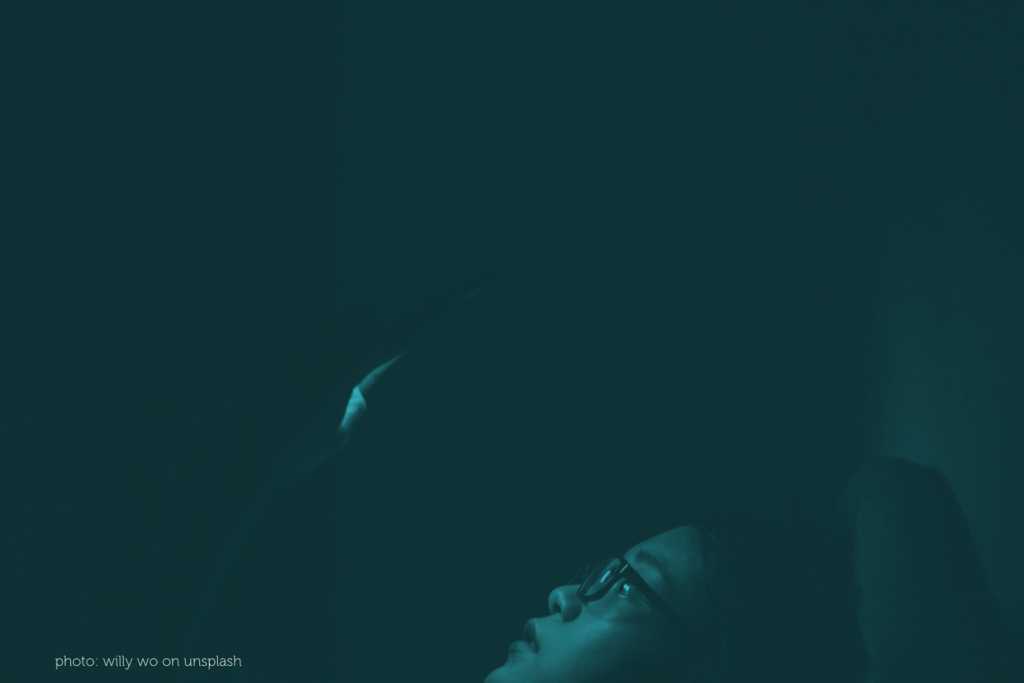
The glow of the iPhone screen feels like the only lamp left in the house. It is a modern-day blackout. My mother recalls the darkness that filled the streets of Dhaka in 1971 during the Bangladesh – Pakistan war, and how heavy that felt. We had to tape the windows, she tells me, her voice reaching across the years to the war. She was only eight but remembers every detail like it was yesterday. “A cross and a plus. Paper tape so the glass wouldn’t shatter inward when the bombs fell.” My mum’s grandmother lived in Pakistan and so when a sudden violent warzone broke out they had to flee to safety. Operation Searchlight she says as she describes the house raids and arrests.
I look at my screen and think about how people learn to protect themselves from impact, a habit inherited even as the world changes shape. Then it was glass and tape while now its language, and the careful management of what can be seen. We are the descendants of the displaced, and we have learnt early that visibility is a risk. There is a cruel irony in this safe haven. My husband and I chose to leave Pakistan, packing up our lives to move across the world with our children seeking a promise of a stable peaceful future here in Canada. But settling here means arriving within the borders of another settler colonial project. A country built on its own deeply entrenched history of erasure and forced assimilation. You quickly learn that the peace offered here is conditional. The same Western state that represents safety for your children is one that monitors your dissent. The gaze is different but the control a familiar echo. In 1971, survival for my mothers family meant hiding their language on the streets of Dhaka, today in Canadian corporate and educational spaces it means scrubbing our vocabulary clean to protect our livelihood. Years later and the only difference seems to be that checkpoints are replaced with algorithms. We are still taping the windows.
The Somatic Scroll
The morning does not begin with light; it begins with the blue glare of the “check.” I find myself scrolling Instagram first, before tea and before my children wake. What does it feel like to wake up in this way, to begin the day with a quiet roll call of the living? To look for the green dot next to a name in a group chat and to look for the “last post” of someone reporting from Gaza.
I sit on the edge of the bed, thumb hovering over the “following” list on Instagram. For many of us our social media accounts follow us into professional spaces, leading us to carefully curate who we follow, unfollow, like, comment about, or engage with. Often time accounts that feel too raw, or visible are deemed too risky and unfollowed. We replace them with ‘safer’ language or neutral posts. We get dressed, and step into a world where our grief has no place to go. It settles somewhere below the ribs, held in place, with nowhere to move.
There is a specific sickness in the “scroll.” My thumb moves an inch and there is a transition from a father holding his child in a plastic bag to an algorithm-driven advertisement for a brand on the boycott list. The shift is jarring and it lodges itself in the throat, a tightening that comes too quickly to name.
At a Toronto public school, a teacher adjusts her scarf before entering the building. “At the beginning, anything connected to Palestine was being removed. Flags were pulled down and students were told to remove their keffiyehs. No explanation was given , she tells me, her voice lowers as she speaks. “My Instagram is monitored, at least that’s how it feels”, she says. Even at home, the feeling lingers. “We have Alexa in the house and my husband drives a Tesla. Sometimes I wonder how much of what we say is being heard somewhere” she says half laughing about the situation. So her resistance takes the shape of her consumership, what she buys, or refuses to buy and what she replaces.
10:15: I’m returning everything to Zara. I can’t look at the tag without seeing a shroud.
12:30: I found Salaam Cola at the corner shop. It’s small, but it’s mine.
The Vocabulary of the Void
At work, the vocabulary has shifted in the weeks and months since October 7th.Instead of naming Israels genocide in Gaza people use phrases like:
“Thinking of everyone in the region.”
“Hard to focus with everything going on.”
“The region,” “the situation,” “the complexities” gesture toward meaning but stop short of naming it, softening what is actually grief, anger, and urgency into something safer or easier to say. In Canada, the resistance to naming violence has a defensive history. The anxiety around words like genocide and settler colonialism doesnt start and end with Gaza it is in fact weaved into the foundation of Canadian history. To point fingers at name land as stolen land holds an uncomfortable mirror to the land we stand on today. This is why the language must remain sanitized. The same language used to manage their own history with Indigenous communities is now being used to paint Palestine’s uncomfortable truth.
When a friend messages me privately and writes Gaza, it feels heavier, but like something real has entered the room.
In our “Moms’ Group” chat, the revolution is televised in low-resolution and discussed over morning coffee. For this group the boycott list is more of a grocery list than a political manifesto. We share “Safe Brands” with the same urgency we once shared teething remedies. Across cities and time zones, mothers carry these lists as a way of participating in resistance and exerting pressure in the only ways available to them.
“Don’t buy the oranges with the blue sticker.”
“Try this brand instead, it’s actually good.”
When the news broke that Starbucks had lost $11 billion in market value in December 2023 my chat groups were celebrating. “Did you see this?” someone typed, followed by a string of watermelon emojis. “They’re feeling it.” “Every cup matters,” another replied. There was satisfaction in that moment knowing that something, somewhere has shifted.
The Language of Endurance
A shared language emerges in these threads that reflects a transregional vocabulary of grief and endurance. Certain words return again and again. The ones that resonate for me are Sabr ( patience) and Sumud ( steadfastness). These words are not new; they have travelled across generations, borders, and different histories of conflict, pain and displacement.
Sabr is spoken when there is nothing left to do but continue. To sit with what cannot be changed and to move through days that feel unsteady. Sumud is quieter but firmer: the decision to remain, to hold on to life and memory even when everything around it feels fragile. Though in these words people practice endurance.
All wars end. My mother too recalls the end of the Bangladesh Liberation war when she was in Dhaka. She remembers my grandfather, Mohammad Idrees, giving the azaan, the call to prayer, from their home in Dhaka. She says “It was to warn people,” that danger was near so people could stay alert or take cover. But it was also for stability when everything felt uncertain. For my grandfather, the azaan was a sanctuary. He stayed behind when his family left—my mother, her siblings, and her mother—trying to settle what he could, to liquidate his assets before joining them in safety.
“He kissed us goodbye,” my mother says. That memory stayed with her eight year old self.
This message was deleted
Solidarity is not always visible but it is felt. It may be a message deleted after reading or a flag taken down but not forgotten. Sometimes it’s a choice at a checkout counter or a prayer whispered in the living room.
I am vibrating at a frequency the sensors can’t pick up but I am not silent. Like the tape on my mothers window that buffers the impact and keeps witness. I might be a deleted secret kept in the palm of a hand but I am resisting.
![In rage and solidarity with women putting their lives, bodies, and energies into the fight for safer, more caring futures.
We’re thrilled to introduce three seed grants in support of the rage driven good work by cis and trans women and non-binary people. And we’re even more thrilled to be collaborating with the @schoolofio School to expand the depth and scope of this work.
Application link and details on writingwomen.co
“[it is] our power to envision and to reconstruct, anger by painful anger, stone upon heavy stone, a future of pollinating difference and the earth to support our choices” -Audre Lorde
.
.
.
.
.
#writingwomen #seedgrants #insolidarity](https://writingwomen.co/wp-content/plugins/instagram-feed/img/placeholder.png)